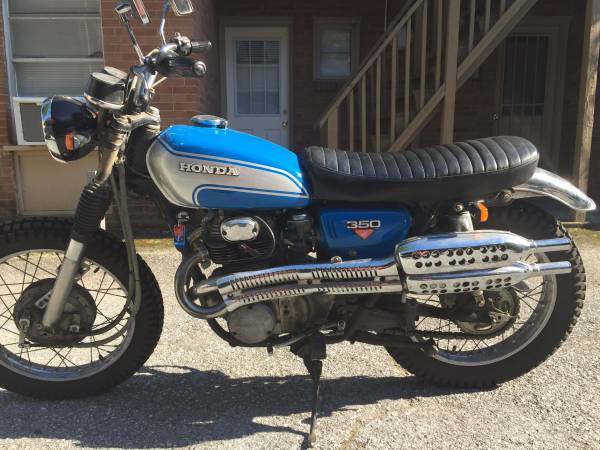
1971 Honda CL350 Scrambler 17k miles. Newly cleaned carbs, new electrical charging system, newly installed turn signals, new chain, new sprockets, new clutch/brake cables, new battery, new tires. It starts well and runs great. It gets serviced at the best motorcycle mechanic in Houston. Original paint, side covers, even the handlebar grips are 45 years old and in great shape! Shipping is easy! Only about $250. Make me an offer! Call Alex 850-766-0171
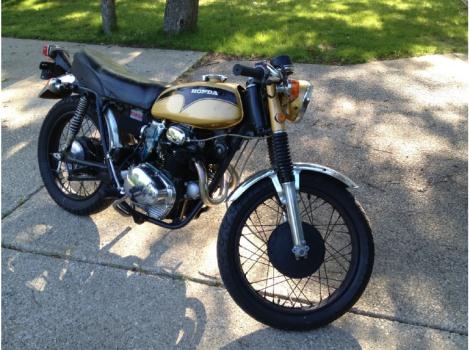
1971 Honda Scrambler , 1971 Honda CL350 frame off restoration with clean title. - Powder-coated frame and frame components - "All-Balls" steering stem bearings - Rebuilt front forks (polished, new seals, new fork oil) - New tires (less than 300 miles) - New "Yuasa" battery - Cafe style handlebars - New chain and sprockets Engine: - Professionally-rebuilt heads with new exhaust valves. - New pistons an rings - Upgraded cam chain tensioner - all new seals and gaskets - new spark plugs, points, and condenser - carburetors rebuilt with new "Uni" air filters - Engine painted gloss black with polished engine covers $2,250.00
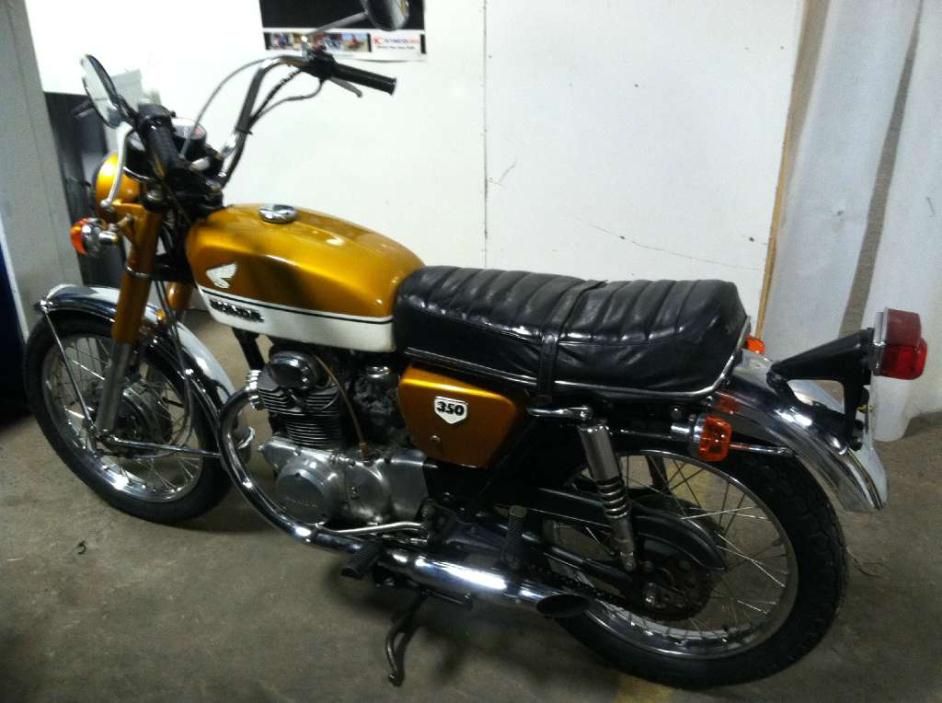
1971 Honda CB350, RETRO - Engine: 324cc air-cooled OHC parallel twin, 64mm x 50.6mm bore and stroke Claimed power: 33hp @ 9,500rpm Top speed: 100mph Weight: 346lb (157kg) Fuel capacity/MPG: 2.4gal/45-50mpg Price then/now: $700/$1,500-$4,000 Honda might not have been the first motorcycle maker to market a high-pipe 2-cylinder scrambler, but it was probably the most successful. Many manufacturers had traveled down the scrambler-style street-oriented route before Honda, including BSA and Triumph. None of them, though, were as successful as Honda and their CL350 model, and according to Honda restoration guru Charlie O?Hanlon, none of them have the same cachet. They were built to be ridden, they were built to be reliable, and they were built for people to have fun on them. Honda broke open the American market for small, rider-friendly motorcycles in 1959 when they established their import business in LA. Prior to Honda, many of the motorcycles being ridden on the streets and in the dirt in the U.S. were heavy American-built V-twins. Lighter British iron was more sporting, but still featured relatively crude production qualities.