$4,999
Wauconda, Illinois
Category
-
Engine
2053cc cc
Posted Over 1 Month
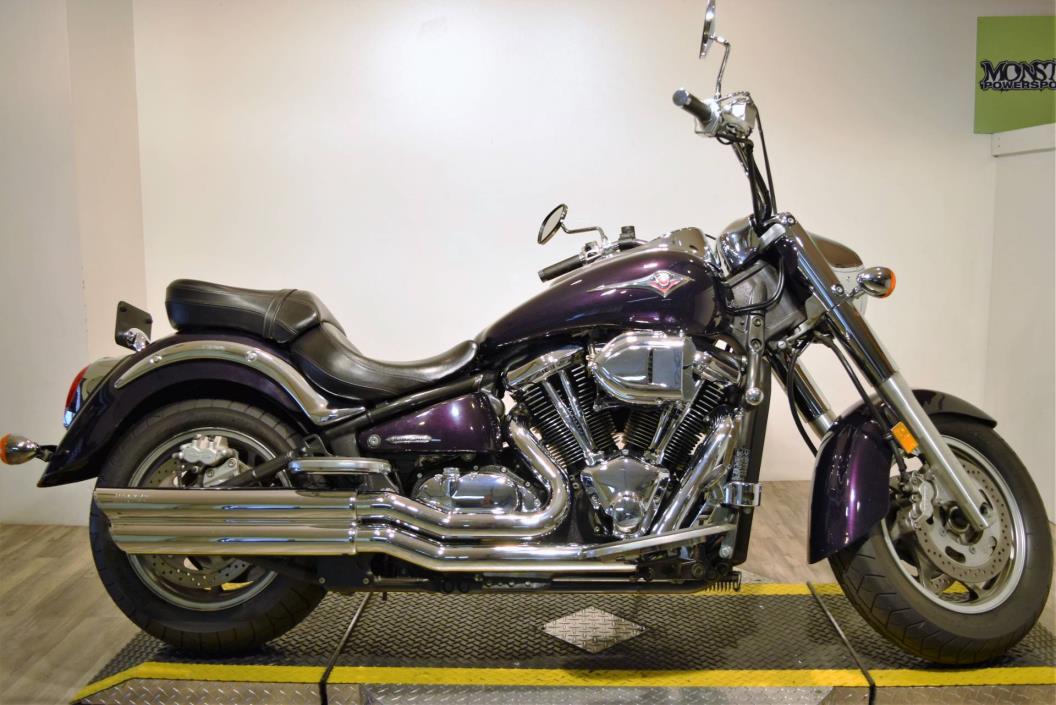
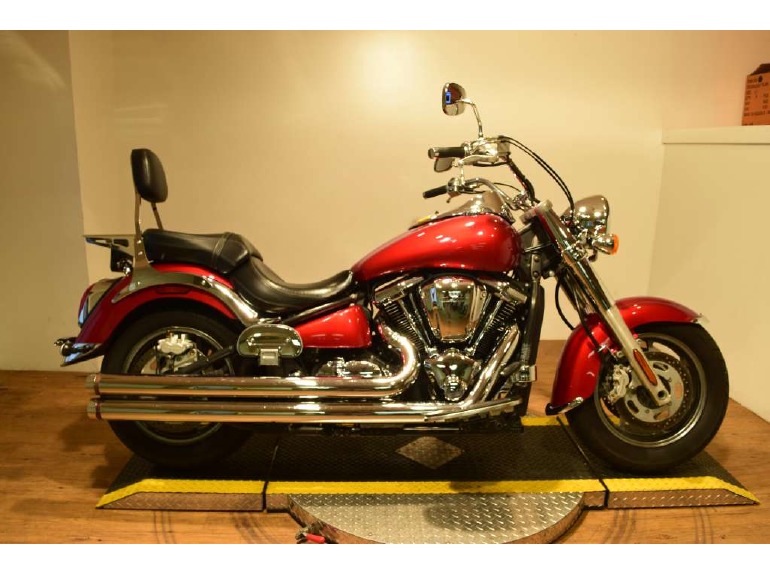
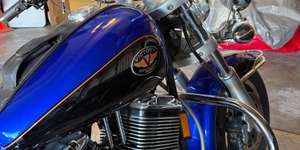
The newest and biggest Vulcan gives Kawasaki a commanding lead in the ongoing cruiser displacement race. The first production motorcycle engine to break the two-liter barrier, the 2053cc pushrod V-twin in the Vulcan 2000 is more than 250cc larger than the next-biggest motorcycle V-twin, Honda's VTX1800, and makes 1500-class twins suddenly seem like middleweights. But what does 125 cubic inches in the engine room give you? Well, bragging rights certainly, and a massive dollop of power to be sure, though perhaps not the tire-smoking, arm-wrenching shot of acceleration that you might anticipate if you think that displacement automatically delivers horsepower. However, you get the kind of power that delights riders who like a motorcycle that rumbles down the highway at a relaxed pace but can still deliver a strong lunge when you roll on the throttle. Both fourth and fifth gears are overdrives, so the engine is turning only about 2250 rpm at 60 mph in fifth. But at that rpm, it is already making a massive 120 foot-pounds of torque, just off the 121-foot-pound peak, which it reaches just above 85 mph. When you roll it on, the engine gets up and chugs. The fuel-injected engine starts up immediately when the button is prodded and runs smoothly right away. The fuel-injection and engine-management systems apparently use fuel pretty efficiently, because the V2K averaged close to 40 mpg, and we didn't even drop below 30 mpg when riding hard on snaking back roads. Of course, the tall gearing contributes on the highway, where the 5.5-gallon tank lets you comfortably ride more than 150 miles before looking for some 90-plus octane petro-swill. The low-fuel light came on with more than a gallon in the tank. Straightening the bike when filling the tank allows you to add about a half-gallon more fuel in the tank. The upsizing extends beyond the Vulcan 2000's displacement. The V2K is a big motorcycle, with a 68.3-inch wheelbase and 820 pounds of road-squashing weight. Although the saddle is just 26.8 inches off the road, you feel the mass when you lift the bike off the sidestand (which should be lengthened a bit to keep the motorcycle from leaning so far, in our view). Once rolling, the sense of mass is reduced, though not as dramatically as with that other recent leviathan, Honda's Rune. The wide bar offers plenty of leverage, but its length can also create problems when making full-lock turns at walking speeds. Then the outside grip of that long handlebar will actually be out of reach for shorter riders, and the inside end of the handlebar will be bumping into your knee. It's pretty awkward. The bar's width is also an issue for lane-splitters.